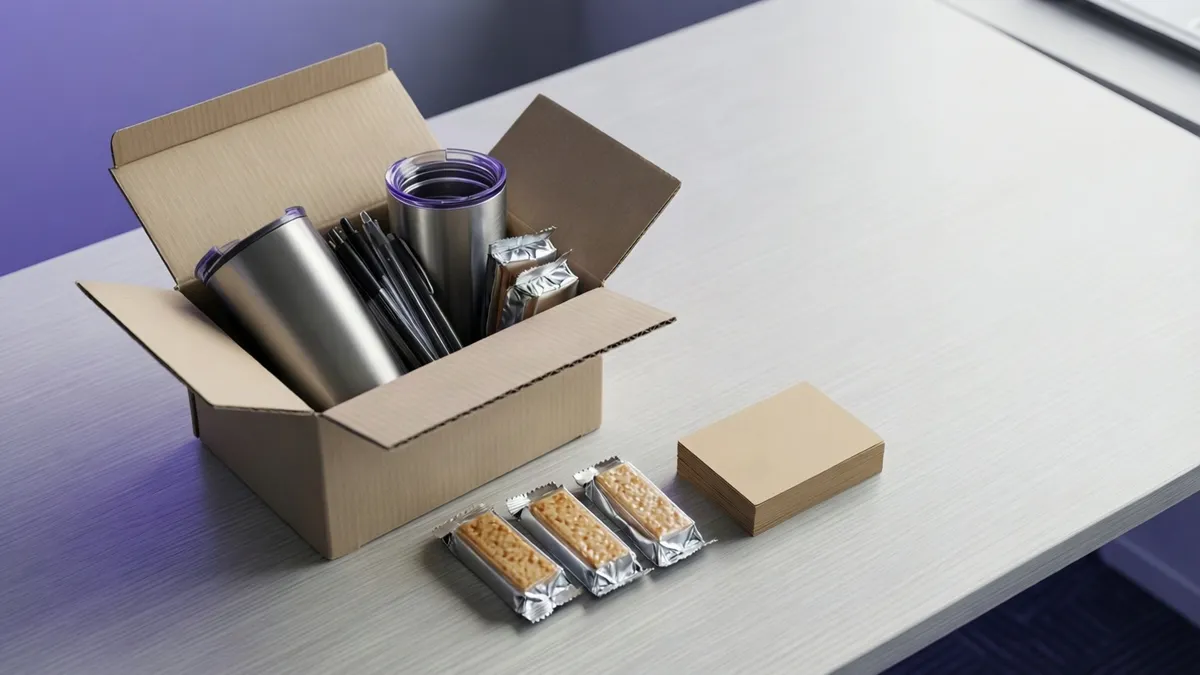
Short answer: at pack quantities, the sticker price stops being the price. Add shipping and personalization, divide by headcount, and a $4 multi-pack item can land at $7 to $9 per person. That is still the cheap route if people keep the thing. Order the plain, consumable, unbranded version, size the pack to your headcount, work backward from the date, and skip anything that implies a friendship you do not have.
These are buying guides, not lab reviews: we have not used every item on this page. Specs come from the manufacturer or the listing, and whatever Amazon shows when you click is the authoritative figure.
This article contains affiliate links. If you buy through one, we earn a small commission at no extra cost to you. We only recommend what we would suggest to a friend.
The Federal Trade Commission's endorsement guides, 16 CFR Part 255, require a disclosure like that one to be difficult to miss, so it sits above every link here. Our full affiliate disclosure has the rest.
Bulk looks cheap, and per piece it usually is. Per person, three costs pile on: shipping, personalization, and the half of the pack that sits in your trunk until March. This page narrows the wider gifts for coworkers question to one scenario: one item, many times, on your own card.
Timing matters too. The National Retail Federation's 2025 holiday survey put planned seasonal spending at $890.49 per person. This is the second-highest in its history. Of that, $627.93 is earmarked for family and friends. Coworkers come out of what is left, so the arithmetic has to be honest.
What we measured: we read the ranking pages this search returns in full (one more could not be read) and compared what each one prices. Across the 12 guides we analyzed, mentioned prices vary widely, with a median price point appearing relatively low across the various mentions. Several of the 12 make bulk multi-packs the core move, and the same group pushes drinkware hardest. Prices are as quoted in those guides, not live listings, so treat them as a snapshot.
Why the sticker price is not the per-person price
Sticker price compares items. Landed cost compares decisions, and it is unit price plus shipping plus personalization, divided by everyone on the list.
A pack listed at $4 per piece rarely stays $4. Shipping weighs more at small quantities, and a name or logo adds setup the listing buries in the options menu. At a headcount of fourteen, our estimate lands that item at $7 to $9 all-in.
Price bands below are ours, not a sourced figure.
| Category | Listed unit price | Per piece at a 50-pack (ours) | Shipping + personalization, per piece (ours) | Landed per person, fourteen people (ours) | Kept or drawer clutter (ours) | Safe for a near-stranger (ours) |
|---|---|---|---|---|---|---|
| Tumblers, mugs | $3 to $5 | $2 to $4 | $1 to $3 | $5 to $9 | kept if plain, clutter if logoed | yes, unbranded |
| Sealed snacks, candy | $1 to $2 | $1 to $2 | under $1 | $2 to $3 | eaten, so kept | yes, allergen-checked |
| Stationery, desk supplies | $1 to $2 | under $1.50 | under $1 | $1 to $2 | used weekly | very safe |
| Small tech accessories | $5 to $10 | $4 to $8 | $1 to $2 | $6 to $11 | mixed | mostly yes |
| Bundled kits | $10 to $20 | similar | $3 to $6 | $13 to $25 | mostly clutter | risky |
Our take: our call is that stationery and sealed snacks win at almost any headcount, because their landed cost barely moves and nothing gets thrown away. Drinkware earns its spot only plain and unbranded, and bundled kits lose at any price: the filler is most of what you pay for. If several people work remotely, pay the per-address fee or send cards; do not ship one box to an office and hope.
Cheap office gifts that survive the desk drawer
The keep test is short: used weekly, eaten, or used up. Everything else is drawer inventory, and drawer inventory is the expensive gift at any price.
Drinkware is the category most guides push, and a plain tumbler in a 24-pack can pass the keep test. But people already own drinkware in quantity. The version that survives is the unbranded spare, never the logoed one.
When you cannot predict taste, boring wins on evidence. In that NRF survey, gift cards were the most-wanted gift, named by 50% of consumers, ahead of clothing or accessories at 46%. A wrapped snack variety pack or a bulk pen order runs the same logic: flexible, impersonal, used.
Resist the morale argument for spending more. Gallup and Workhuman's recognition research found well-recognized employees 45% less likely to have turned over two years later, but that is an employer program measured across years. Your $60 is not it. Gallup's 2026 State of the Global Workplace report puts engagement at 20%, its lowest since 2020. It estimates low engagement will cost the world about $10 trillion in 2025, roughly 9% of GDP. Buy for the desk, not the org chart.
Picking for a coworker you barely know
Neutrality is the rule. No sizes, no names, no alcohol, no scent, no lottery tickets: each assumes knowledge you do not have or excludes someone you cannot see. Scent and sweets are taste, and taste is exactly what distance removes.
Allergies are handled by separation, not guessing. Individually sealed items with visible ingredient labels let people opt out quietly, which is the kindest version of opting out.
If a manager reimburses the order, the rules change. The IRS publishes gift-tax rules that shift year to year, so whoever runs the money should check the current treatment before the receipts pile up.
Bulk ordering math: lead times, quantity breaks, and the date
Three numbers, in order: the cap, the headcount, the date. The pack size falls out of the second, personalization falls out of the third.
Our suggested worksheet: cap $ × headcount = $; add $ shipping, divide by people = $ landed per person; order on (date minus lead time).
- Fix the per-person cap before browsing anything.
- Count heads, including yourself if you are in the exchange.
- Set the arrival date, then work backward from it.
- Pick the smallest pack that covers the headcount; at fourteen, a 50-pack leaves thirty-six spares.
- Add shipping and personalization per piece before comparing listings.
- Skip personalization unless the date has a month of slack, because proofs add rounds.
Quantity breaks are real and mostly irrelevant here. The per-piece drop from 50 to 250 units will not pay for sixty spare tumblers, and plain items ship in days while personalized ones sit in proof cycles. Multi-address shipping exists for remote teammates and charges per address, so check the seller's pricing page before committing.
The one-item-for-everyone version of this problem is covered in bulk gifts for coworkers; single-recipient caps are a different problem, handled in small gifts for coworkers.
Bulk gift questions, answered
How much should a bulk coworker gift cost per person?
For a personal order, $3 to $5 per head covers consumables, and $8 to $12 buys plain drinkware or a small tech item. Past about $15, you are in individual-gift territory, and matching the group matters more than the object.
How far ahead should I order personalized bulk gifts?
Plain items can arrive within days. Personalized runs add proof rounds, so order three to four weeks before the date and trust the seller's stated production time over the delivery estimate on the listing.
Can I bring one big shared treat instead of individual gifts?
Yes, and it often lands cheaper per head: a catered breakfast for twenty can beat fourteen separate items. It reads as a moment rather than a keepsake, and some groups prefer that trade.
Are homemade food gifts a good bulk option?
Reception splits: some people love them, others quietly bin anything from an unfamiliar kitchen. Sealed, store-bought items with visible labels avoid the worry, and if you bake anyway, attach the ingredient list.
What works for a mixed group when I know nothing about anyone?
Unbranded consumables and stationery fail nobody. A flat-amount multi-brand digital gift card goes one further: each person picks, and nothing ships to an address you had to ask for.
Priya Raman writes for this site's editorial team, compiling buying guides from public sources and manufacturer specs rather than hands-on product testing.
Sources
- National Retail Federation (NRF) — "Consumers to Spend Second-Highest Amount on Record, According to NRF Holiday Survey" (https://nrf.com/media-center/press-releases/consumers-to-spend-second-highest-amount-on-record-according-to-nrf-holiday-survey) "Retrieved 2026-09-11".
- Gallup — "Workhuman: Gallup-Workhuman Recognition in the Workplace" (https://www.gallup.com/analytics/472658/workplace-recognition-research.aspx) "Retrieved 2026-09-11".
- Gallup — "State of the Global Workplace: 2026 Report" (https://www.gallup.com/workplace/349484/state-of-the-global-workplace.aspx) "Retrieved 2026-09-11".
- Federal Trade Commission (FTC) — "Guides Concerning the Use of Endorsements and Testimonials in Advertising" (https://www.ftc.gov/legal-library/browse/federal-register-notices/guides-concerning-use-endorsements-testimonials-advertising) "Retrieved 2026-09-11".